


We often talk about financial risk tolerance as if it were a fixed trait. It is not. In our experience, it behaves more like a moving response inside a living system. Income changes, family pressure, market shocks, age, memory, and even the timing of bills can shift how much uncertainty we can handle.
Financial risk tolerance is not only about personality. It is also shaped by the systems we live inside.
That idea matters because many people judge themselves too fast. They think, “I am bad with risk,” or, “I used to be brave, now I am not.” But what changed may not be character alone. The wider system may have changed first, and your response followed.
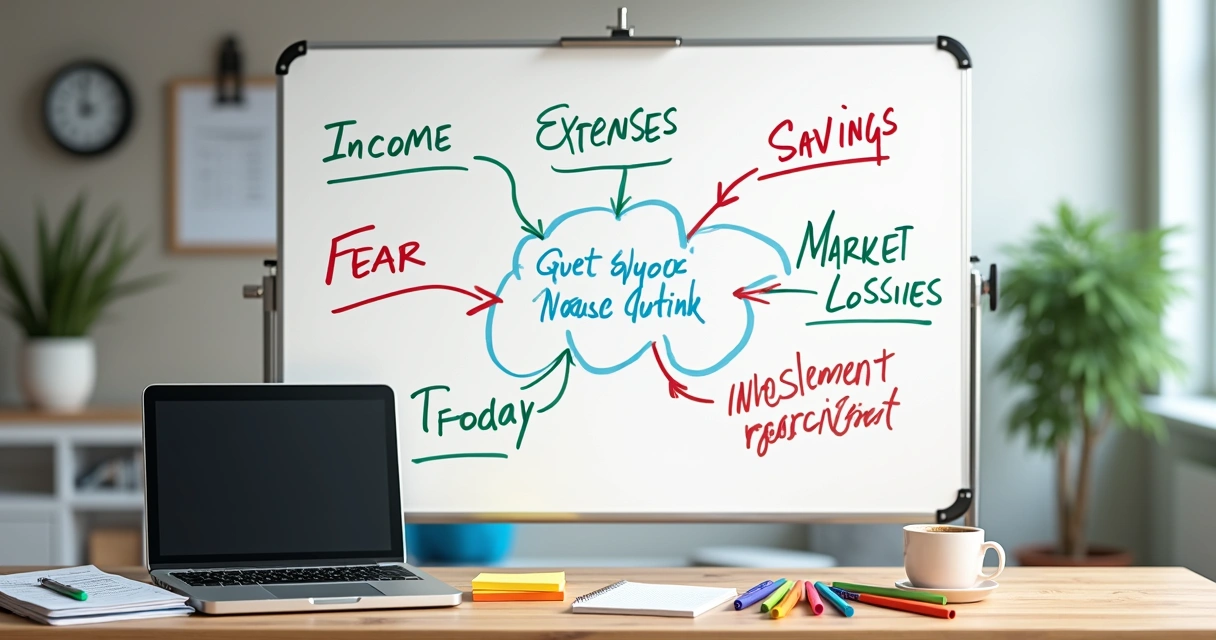
When we look closely, we see loops. A loss creates fear. Fear reduces exposure. Reduced exposure may lower gains. Lower gains may increase insecurity. Then insecurity makes the next decision even tighter. This is how system dynamics work in daily financial life. Small shifts can build larger patterns over time.
Risk tolerance lives inside feedback loops
System dynamics is the study of how parts of a system influence one another over time. In finance, this means our choices are not isolated. They react to events, and then those reactions create new conditions.
We can think of financial risk tolerance as the result of several feedback loops acting at once:
- Personal cash flow and debt obligations
- Family expectations and dependents
- Past gains and losses
- Economic news and social mood
- Life stage, health, and work stability
If one part becomes unstable, the whole pattern can shift. A person with stable income, low debt, and long-term goals may accept more uncertainty. The same person, after a layoff or health scare, may react in a very different way.
Risk feels different when the system around us feels fragile.
That is why two people with the same salary may still have very different risk tolerance. One may support parents, children, or both. Another may have savings, low fixed costs, and emotional calm. The numbers matter, but the structure behind the numbers matters too.
Age, memory, and social conditions
Risk tolerance changes across time, and not only because people “become conservative.” Age interacts with experience, and experience leaves marks. A Federal Reserve analysis of long-term retirement data found that risk tolerance tends to fall with age, by about 1.7% per year, with visible cohort effects too. People formed closer to severe economic hardship showed lower willingness to take financial risks.
This finding helps us see that financial decisions are partly historical. We do not respond only to present facts. We also respond to stored impressions. A person who watched parents lose savings may carry caution for decades. Another person who grew up during expansion may read the same market event with less fear.
Our tolerance for risk is shaped by what our nervous system has learned to expect.
We have seen this in ordinary conversations. Someone says they want growth, but their body tightens at every downturn. Another says they fear volatility, yet they stay calm because they trust their emergency reserves. The visible choice comes after an invisible interpretation.
Shock events reset the system
Large disruptions can change risk tolerance at scale. During a financial crisis, people do not only lose money. They lose confidence in patterns they thought were stable. That can reset behavior for years.
A faculty publication from the University of Rhode Island on household behavior during the 2007 to 2009 crisis found that many households became more risk averse and reduced stock exposure. The shifts were not uniform. Some groups cut exposure more sharply, while higher education, age, and wealth were linked to smaller changes in tolerance.
This shows a system point that we think many people miss. External shocks do not hit everyone the same way because each household sits in a different web of buffers and pressures.
When buffers are weak, risk feels larger. These buffers may include:
- Cash reserves
- Stable employment
- Social support
- Financial knowledge
- Low dependency burden
Without those buffers, even a smart long-term plan may collapse under short-term stress. This is not irrational. It is a system response.

Cash flow timing can change risk appetite fast
Some shifts in risk tolerance are not about long periods. They happen within days or weeks. This is easy to overlook, but it matters a lot for real decisions.
Working materials linked to the Health and Retirement Study at the University of Michigan describe income-cycle effects on risk preferences. Low liquidity and payday timing can create short-term instability in willingness to take risk, especially among older adults and people living close to fixed income schedules.
We find this point very human. A person may feel open to investment risk one week and avoid it the next, not because their beliefs changed, but because rent, medical costs, or delayed income tightened the system. The mind then reads the world through scarcity.
Short-term liquidity pressure can lower risk tolerance even when long-term goals stay the same.
This is why good self-assessment should not happen in the middle of financial stress if possible. If we assess our tolerance at the peak of pressure, we may confuse temporary contraction with stable preference.
The hidden role of emotional regulation
Risk tolerance is often treated as a math issue, but we think it is also a regulation issue. Two people may understand the same numbers and still act differently because one can stay present under uncertainty and the other cannot.
This does not mean fear is wrong. Fear gives data. The issue is whether fear informs us or takes command of us. When internal pressure rises, many people move from planned action to reactive action.
We can notice this in a simple sequence:
- A loss or threat appears.
- The body reads danger.
- Attention narrows.
- Time horizon shrinks.
- Long-term strategy gets replaced by immediate relief.
That sequence is common. It is also costly. If we do not notice it, we may keep redesigning portfolios when what really needs support is our decision state.
How to work with your system, not against it
In our view, the healthiest approach is not to force bravery. It is to improve the system that holds the decision. When the system becomes steadier, risk tolerance often becomes clearer too.
That can include a few grounded actions:
- Build an emergency reserve before increasing exposure to uncertainty
- Reduce high-pressure debt that shortens your time horizon
- Set rules for decisions before market stress arrives
- Review your responsibilities, not just your returns
- Track how sleep, fear, and cash flow affect your choices
We do not need perfect certainty. We need enough internal and external stability to choose without panic. That is a very different standard.
Conclusion
Financial risk tolerance is shaped by more than attitude. It grows or contracts inside systems made of memory, cash flow, age, social conditions, and emotional regulation. When we understand those interacting forces, we stop treating risk behavior as a simple label.
Some days we are not “bad investors.” We are people responding to pressure, history, and structure. That insight can reduce shame and improve judgment.
When we strengthen the system around a financial decision, risk tolerance becomes less reactive and more honest.
Frequently asked questions
What is financial risk tolerance?
Financial risk tolerance is the amount of uncertainty or possible loss we are emotionally and practically able to accept when making money decisions. It includes both our psychological comfort and our real-life capacity to absorb setbacks.
How do system dynamics affect risk?
System dynamics affect risk by linking our choices to feedback loops such as income, debt, family demands, past losses, and market conditions. A change in one part of the system can alter how much risk feels acceptable.
Can I improve my financial risk tolerance?
Yes, we can often improve it by making the surrounding system more stable. Building savings, lowering urgent debt, planning ahead, and strengthening emotional regulation can help us respond with more balance.
Why does my risk tolerance change?
It changes because life conditions change. Age, recent gains or losses, income pressure, health concerns, family duties, and social events can all shift how safe or unsafe financial uncertainty feels.
How to assess my current risk tolerance?
We can assess it by looking at both numbers and behavior. Review your cash reserves, debt, time horizon, and responsibilities. Then notice how you react to losses, stress, and uncertainty. The clearest view comes when we measure both financial capacity and emotional response.